Malik Imran Awan | Create your badge
Back to TOP

Follow malikimrana1 on Twitter

Search This Blog

Friday, January 23, 2015

THE FIRST MODULE OF A FUTURE SPACE HOTEL IN EARTH ORBIT

Go to space dream of many inhabitants of the earth. However, modern technology is not yet ready to implement science-fiction dreams everyone. It is possible that not very distant future, there will be the first lucky ones who can not go on holiday in the hot tropical countries, and in the orbit of our planet.
Bigelow Aerospace Company was established in 1998 in order to create the world's first space hotel. At this stage, it is developing a residential unit for the ISS. It is a private company of hotel magnate Robert Bigelow, who set out to open the first orbital hotel. Bigelow Aerospace developed manned space modules, two of them, even without a people, but are already orbiting the Earth.
As advertising in early September in Yekaterinburg will host the International Exhibition and Conference Oil & Gas Great Urals. For those wishing to proposed lease of podiums and a few other options for participation in the exhibition. All the details about the event can be found on the website uoge.ru. Here is the exhibition program and the program of the conference.
first orbital hotel BEAM 1 (680x503, 347Kb)
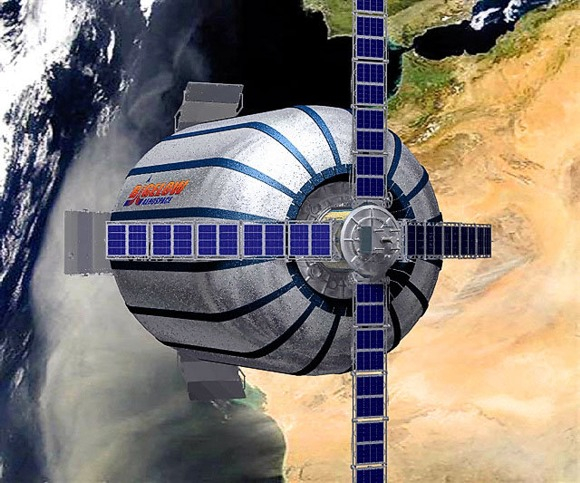
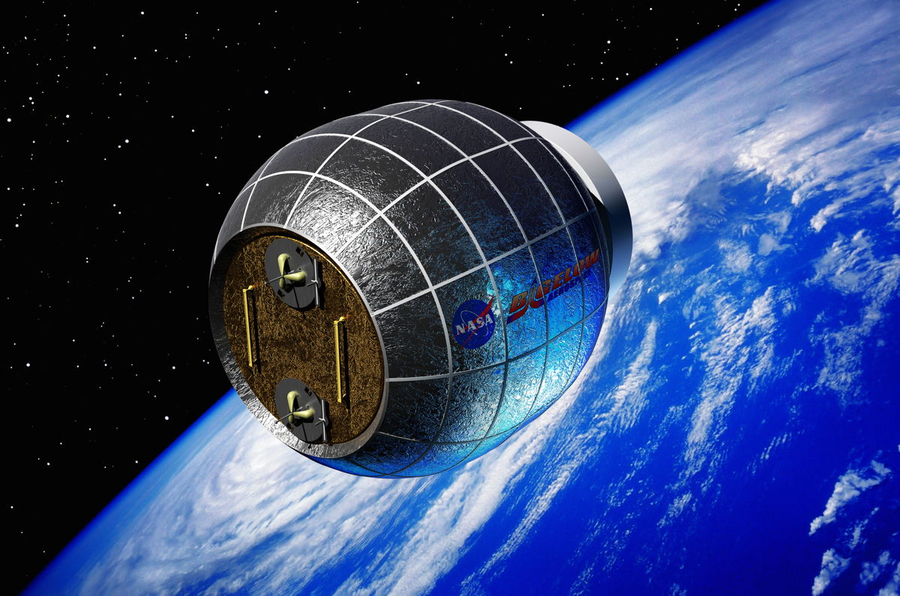
Bigelow Expandable Activity Module, and abbreviated BEAM, will be the first manned orbital module in Earth orbit. In expanded form an inflatable space station will have an area of 330 m 3 and can accommodate 6 astronauts.
first orbital hotel BEAM 5 (600x400, 172Kb)
BEAM launch into orbit is scheduled for 2015-th year. Within two years of the ISS astronauts will test module for durability, safety and comfort for human habitation. These studies will form the basis for further work on the creation of the world's first orbital hotel.
first orbital hotel BEAM 4 (580x483, 287Kb)


first orbital hotel BEAM 3 (700x463, 345Kb)
first orbital hotel BEAM 2 (700x450, 240Kb)

Read more

Read more...

Monday, June 6, 2011

The Glossary of Telescopes

When you enter into any new area of science, you almost always find yourself with a baffling new language of technical terms to learn before you can converse with the experts.  This is certainly true in astronomy both in terms of terms that refer to the cosmos and terms that describe the tools of the trade, the most prevalent being the telescope.  So to get us off of first base, let’s define some of the key terms that pertain to telescopes to help you be able to talk to them more intelligently. 

The first area of specialization in telescopes has to do with the types of telescopes people use.  The three designs of telescopes that most people use are the Refractor, the Reflector and the Schmidt Cassegrain telescope. 

*    The refractor telescope uses a convex lens to focus the light on the eyepiece. 

*    The reflector telescope has a concave lens which means it bends in.  It uses mirrors to focus the image that you eventually see. 

*    The Schmidt Cassegrain telescope uses an involved system of mirrors to capture the image you want to see.

*    A binocular telescope uses a set of telescopes mounted and synchronized so your view of the sky is 3-D.

Beyond the basic types, other terms refer to parts of the telescope or to the science behind how telescopes work.

*    Collimation is a term for how well tuned the telescope is to give you a good clear image of what you are looking at.  You want your telescope to have good collimation so you are not getting a false image of the celestial body.

*    Aperture is a fancy word for how big the lens of your telescope is.  But it’s an important word because the aperture of the lens is the key to how powerful your telescope is.  Magnification has nothing to do with it, its all in the aperture.

*    Focuser is the housing that keeps the eyepiece of the telescope, or what you will look through, in place.  The focuser has to be stable and in good repair for you to have an image you can rely on.

*    Mount and Wedge.  Both of these terms refer to the tripod your telescope sits on.  The mount is the actual tripod and the wedge is the device that lets you attach the telescope to the mount.  The mount and the wedge are there to assist you with a superior viewing session and to keep your expensive telescope safe from a fall.

*    An Altazimuth Mount refers to the tripod of the telescope that holds the device in place and makes it useful during a star gazing session.  The altazimuth mouth allows the telescope to move both horizontally (which is the azimuth) and vertically.  In this way you have full range to look at things close to the horizon or directly overhead.

*    Coma has a different meaning than the one we are used to, and that’s a good thing.  The coma is the blurry area on the outer rims of your view through the telescope.  How big the coma is and to what extent it interferes with your viewing will have is important to the effectiveness of your telesscope.

*    Planisphere.  A fancy word for a star chart.  It is nothing less or more than a detailed map of where everything is in the cosmos and how to find the star you wish to study by keying off of known stars.

*    Barlow.  This refers to a specialized type of lens that you can buy to enhance the magnification of your telescope. 

These are just a few of the basic concepts of telescope operation.  We deliberately picked the ones you have to know to discuss telescopes intelligently.  But your education into the more complex aspects of astronomy and telescope design and operation will go on for as long as you are a lover of astronomy, which we hope is for the rest of your life.
Read more

Read more...

Space

While it was just a TV show, that little speech at the beginning of the original Star Trek show really did do a good job of capturing our feelings about space.  It is those feelings that drive our love of astronomy and our desire to learn more and more about it. 

The thing that is most exciting about studying the universe is also the most frustrating and that is that no matter how expert we get, we are always just getting started.  But if it’s any consolation, some of the most advanced minds in science and from history always felt that way about space.  Even the greats such as Copernicus and Einstein looked up into space and felt like they were just a spec in the presence of such infinity.

Of course space is not infinite.  It has to be finite which means somehow there must be an end to it.  But if there is, nobody on this tiny planet has figured out where it is.  The only thing that has brought us to “the end of the universe” is our limited ability to see any deeper into space. 

But conquering the final frontier of space means more than just seeing more stars and planets and building the biggest telescope we can.  There are some mind blowing concepts about how space works that we have ahead of us to conquer.  The big bang and the expanding universe alone was enough to set your mind to spinning.  But then we have the coming of Einstein and the theory of relativity to set the entire idea on its ear.  All of a sudden space is not just three dimensions but the dimension of time becomes exportable and the twisting and maybe even travel through time seems almost possible.

The frontier of space is as much a journey of the mind as it is of distance.  When Steven Hawking showed us the mysteries of black holes, all of a sudden, time and space could collapse and be twisted and changed in those intergalactic pressure cookers.  If not for the wonders of radio astronomy, these ideas would remain just ideas but slowly science is catching up with theory.

But the brilliance of mathematicians and genius minds like Hawking and Einstein continue to stretch our concepts of space.  Now we have the string theory that could revolutionize everything we know about space, time and how the universe relates to itself.  We can’t just say, no, we have discovered enough.  It’s the final frontier.  The Starship Enterprise would not stop exploring so neither can we.  Because there is a hurdle still ahead that has a name but no real answer to it yet.  It’s called the Unified Field Theory and those that know tell us that when the Einsteins and Hawkings of our day crack that theory, every other theory will fall into place.

These exciting concepts seem some tools to put the enormity of space in context.  That may also be the value of science fiction.  Not only are science fiction writers often the visionaries of what comes to be in the future but they give us the idea that space is knowable, that despite how big it is and how small we are, we can conquer this frontier like we have conquered others before us.

For mankind, that is often enough.  If we can get the vision that we can conquer something, even if it is something so massive, so impossibly huge, it seems that we are capable of anything.  And the love of astronomy, maybe unlike any other force on earth, has brought together mankind toward that common goal of conquering the universe.  The quest to establish an international space station and to cooperate on spreading our reach off of this planet seems to find commonality between nations that otherwise cannot get along on the surface of the earth.

That alone may be a reason that we must continue to support astronomy locally and the space program nationally.  It is something that seems to bring peace rather than war and make us a better people.  But more than that it is as though this is what we were created to do.  To reach out to the stars may be our destiny.  If so then our love of astronomy is more than a hobby, it’s a calling.
Read more

Read more...

Pictures in the Sky

One of the earliest activities we engaged in when we first got into astronomy is the same one we like to show our children just as soon as their excitement about the night sky begins to surface.  That is the fun of finding constellations.  But finding constellations and using them to navigate the sky is a discipline that goes back virtually to the dawn of man.  In fact, we have cave pictures to show that the more primitive of human societies could “see pictures” in the sky and ascribe to them significance.

Constellations also have been important in culture and navigation long before we had sophisticated systems of navigation.  Early explorers, particularly by sea, relied exclusively on the night sky to help them find their way to their destination.  In fact, when “Columbus sailed the ocean blue in 1492” and “discovered” America, he could not have done it without astronomy and the help of navigation of the cosmos, much of which is made possible because of the important constellations. 

When learning to find the great constellations in the sky, we use the “find one, you found them all” system.  That is because the easiest constellation to find will guide us to the rest of them.  That constellation is The Big Dipper.  Look to the northern sky on a clear night and widen your field of vision from just focusing on one star and it will pretty much jump out at you.  In will look like a big kitchen pot or ladle, right side up in the fall, upside down in the spring.

When you have the big dipper under control, you can pretty easily find the North Star.  This is the star that those ancient sailors depended on the most to find their way to land.  Start with the far edge of the bowl of the Big Dipper, the side that is opposite the handle.  There are two stars that make up that side of the bowl.  So start at the bottom of the pot and mentally draw a line to the top star of the bowl.  These two stars are “pointing” to the North Star.  Just keep following that line, curving a bit with the sky and the bright star that you come to is the North Star.  You can impress your friends or family if you know the scientific name for this star is Polaris.

The North Star can then take you to The Little Dipper.  The key here is that Polaris is the tip of the handle of The Little Dipper and the bowl hangs down from the handle like it was hanging up in the kitchen.  Be patient with this one as the stars that make up The Little Dipper are dimmer than The Big Dipper.  But it pretty cool once you find it.

These are the obvious starting places but from The Little Dipper you can find the constellation known as “The Swan” or Cygnus.  Just use the same system you used to find The North Star but continue drawing that line that started in those pointer stars in the bowl of The Big Dipper.  Go about half as far as you went to find Polaris and you are there.  You will see a trapezoid of stars about as big as The Big Dipper.  This trapezoid forms the tail of The Swan.

That line that we are drawing from the pointer stars is our roadmap to another well known constellation which is Cassiopeia.  If you use that line and imagine you are directly under the two pointer stars, you will se a big “W” just off to the left of the line.  This is the constellation Cassiopeia, the wife of the king of Egypt, Cepheus, in Greek mythology.  There are so many more wonderful constellations to find and a good star map can continue your quest.

Like Cassiopeia, all of the constellations have wonderful stories and myths related to Greek culture.  It is just as fun to find the star clusters themselves as it is to enjoy the rich culture related to that constellation.  For all of the signs of the zodiac, for example, there is a related constellation in the sky.  So whether you are serious about astrology or not, its fun to find the constellation that relates to your “sign” (or that of your children) and be able to see how the ancients related to these pictures in the sky.
Read more

Read more...

Moon Fever

Of all of the celestial bodies that capture our attention and fascination as astronomers, none has a greater influence on life on planet Earth than it’s own satellite, the moon.  When you think about it, we regard the moon with such powerful significance that unlike the moons of other planets which we give names, we only refer to our one and only orbiting orb as THE moon.  It is not a moon.  To us, it is the one and only moon.

The moon works its way into our way of thinking, our feelings about romance, our poetry and literature and even how we feel about our day in day out lives in many cases.  It is not only primitive societies that ascribe mood swings, changes in social conduct and changes in weather to the moon.  Even today, a full moon can have a powerful effect on these forces which we acknowledge even if we cannot explain them scientifically.

The most obvious physical phenomenon that is directly affected by the gravity of the moon are the tides of the ocean.  The tides are an integral part of how maritime life is regulated and the comings and goings of the fishing world in coastal communities.  But not very many people know that at certain times of the year when the orbits of the earth bring the sun and moon into right alignment, there can even be tidal effect on inland bodies of water and even on the solid earth.  Eons ago, when the moon’s orbit was closer to the Earth, it was the effect of the moon that caused massive changes in the topography of the land and on continental drift as well.  This reflects the powerful effect the moon has had on both human history and on global geographical history as well.

You may sometimes wonder where the moon came from.  Was it a planet that traveled too close to Earth and was captured in our orbit?  Actually, the prevailing theory of modern science is that the moon was the result of a large scale collision with the still developing Earth early in its development which caused this large “chuck” to spin off into an orbiting body.  This explains the similarity in composition as has been confirmed by many of the moon exploratory space missions that were conducted by NASA.

But this background also highlights another important influence the moon has had on Earth’s development that is seldom recognized and that is the stabilization of Earth’s orbital pattern.  Most know that Earth is not round but more of an egg shaped orb.  To be blunt, the Earth would wobble.  Without the moon’s stabilizing influence, this shape would shift dramatically so the tilt of the axis, that is the polar caps would shift dramatically with each seasonal rotation producing climacteric, changes much more violent and drastic than we are used to.  It is possible that life as we know it could not have developed here had the moon not been there to “keep the Earth in line” and continue to stabilize the orbital position of the Earth so our climate could remain stable and mild.

A third significant influence of the moon comes from that origin as coming from a collision which “ripped” the body of the moon from the developing core of the Earth.  Because of this disruption in how the core of our planet developed, the metals that are usually intact in the core of the planet are actually scattered up and down the geography of the earth in diverse ways.  Usually the metals of the planet are all concentrated deep in the core.  But because of the collision which took the moon out to orbit, metals that have been crucial to the development of our industrial and technological cultures are readily available and easy for use to mine.  This again, is something we can thank the presence of that lovely moon in the sky for.
Read more

Read more...

Comets

The one thing we love the most in the world of astronomy is a good mystery.  And if there was ever a mysterious and yet very powerful force of nature that we witness in the night skies, it is the coming of the mighty comet.

The arrival of a comet within view of Earth is an event of international importance.  Witness the huge media attention that the Haley or Hale-Bopp have had when they have come within view The sight of these amazing space objects is simultaneously frightening and awe inspiring. 

Above all, it is during these comet viewings that the astronomer comes out in all of us.  But what is a comet?  Where did it come from?  And how does it get that magnificent tail?

We should never confuse comets with asteroids.  Asteroids are small space rocks that come from an asteroid belt between Mars and Jupiter.  While still quite stunning to see, they pale in comparison to the arrival of a comet.  Asteroids also have received considerable study by the scientific community. 

Not as much is known about comets.  As a rule, comets are considerably larger than asteroids.  The composition of a comet is a mixture of nebulous, gasses, ice, dust and space debris.  One scientist called the composition of a comet as similar to a “dirty snowball” because the composition is so diverse and changeable.  The center or nucleus of a comet is usually quiet solid but the “snowball” materials often create a “cloud” around that nucleus that can become quite large and that extends at great lengths behind the comet as it moves through space.  That trailing plume is what makes up the comet’s magnificent tail that makes it so exciting to watch when a comet comes within view of Earth.

The origins of comets is similarly mysterious.  There are a number of theories about where they come from but it is clear that they originate from outside our solar system, somewhere in deep space.  Some have speculated they are fragments left over from the organization of planets that get loose from whatever gravitational pull and are sent flying across space to eventually get caught up in the gravity of our sun bringing them into our solar system. 

Another theory is that they come from a gaseous cloud called the Oort cloud which is cooling out there after the organization of the sun.  As this space debris cools, it gets organized into one body which then gathers sufficient mass to be attracted into the gravity of our solar system turning into a fast moving comet plummeting toward our sun.  However, because of the strong gravitational orbits of the many planets in our solar system, the comet does not always immediately collide with the sun and often takes on an orbit of its own. 

The life expectancy of comets varies widely.  Scientists refer to a comet that is expected to burn out or impact the sun within two hundred years as a short period comet whereas a long period comet has a life expectancy of over two hundred years.  That may seem long to us as earth dwellers but in terms of stars and planets, this is a very short life as a space object indeed. 

Scientists across the globe have put together some pretty impressive probes to learn more about comets to aid our understanding of these visitors from beyond.  In 1985, for example, the United States put a probe into the path of the comet Giacobini-Zinner which passed through the comets tail gathering tremendous scientific knowledge about comets.  Then in 1986, an international collation of scientists were able to launch a probe that was able to fly close to Haley’s comet as it passed near Earth and continue the research.

While science fiction writers and tabloid newspapers like to alarm us with the possibility of a comet impacting the earth, scientists who understand the orbits of comets and what changes their paths tell us this is unlikely.  That is good because some comets reach sizes that are as big as a planet so that impact would be devastating.  For now, we can enjoy the fun of seeing comets make their rare visits to our night sky and marvel at the spectacular shows that these visitors from beyond put on when they are visible in the cosmos.
Read more

Read more...

Bonding with the Universe.

As parents, we often worry about what our children are getting excited about.  We hope we can guide them to “bond” with healthy things like a love of learning, of family and of healthy social activities.  But we also worry they will bond with the wrong people like internet stalkers or the wrong crowd at school.  Wouldn’t it be great if we could harness that tremendous energy and desire to latch onto something and bond with it and help our children “bond” with the universe through a love of astronomy?

Kids love to get excited about what you are excited about.  So there lots of ways you can “spring” the fun of astronomy on them that will jump start them on a long and happy exploration of the hobby of astronomy.  Here are a few to get your imagination going.

*    Work it into an evening in the backyard.  If you know the night sky will be particularly exciting the night of a big family barbecue, plan to have some blankets out there.  Then as everybody else is playing Frisbee, just lay out a blanket, lay flat on your back and start staring up into the sky with a binoculars.  Like the old prank of staring at a far away spot to get people’s interest, your kids will see what you are doing and what to know what is going on.  As you let them take a peek, their curiosity will take off like a wild fire and they are hooked.

*    A surprise visit to the country.  Sometimes it is hard to see the vast display of stars from within the city.  So if you announce that you are going to show them a surprise one night and have them pile into the car, their curiosity will be going wild as you leave the city.  When you find that quiet park, field or lake side spot, all you have to do is point up and say “just look” and the magnificence of the night sky will do the rest.

*    A special Christmas gift.  You can buy your children an affordable and durable beginner’s telescope along with some easy star maps written just for kids.  Imagine when they open this exciting gift and want to know how to use it.  Don’t be surprised if you are setting up the new telescope in the snow to show them the great things they will see in the cosmos with the gift that Santa wanted them to have.  The gift of astronomy.

*    Unleash the power of a meteor shower on them.  You can keep your eye on the events that are predicted for the sky watchers in your area.  When the next big meteor shower is about to explode over your area, watch the weather for a clear night and get your kids excited about what they are about to see.  As the lights begin to go off over head and you create fun and interesting narration to this dramatic display, the children will be addicts for life for the great experiences that can be had as students of astronomy.

*    Plan a surprise event in with something you are already doing.  For example, on vacation, you can plan your route on a cross country trip to bring you within visiting distance of one of the great multimillion dollar telescopes in this country.  By contacting them ahead of time, you can be sure they are conducting a tour that coincides with your visit.  Just imagine if they can look up at a telescope that is bigger than their house and maybe look through the eyepiece as some amazing cosmic sight, it will be the hit of the vacation.

Astronomy is a great activity to introduce on a family camping trip.  As the family sits around the fire after a fun night of camping, all you have to do is just look up and go “Wow, look at that!” When those little heads look up, they will look back down changed children, children in love with the stars.

Astronomy is a healthy passion for your kids and one they can grow with their entire lives.  And there is probably no better gift you can give them than the love of the stars, of science and of nature that is all wrapped up together when your kids bond with the universe through astronomy.
Read more

Read more...

Wednesday, April 13, 2011

>Beyond the Naked Eye

>It’s hard to say when in our lives each of us become aware of this thing called “astronomy”.  But it is safe to say that at some point on our lives, each and every one of us has that moment when we are suddenly stunned when we come face to face with the enormity of the universe that we see in the night sky.  For many of us who are city dwellers, we don’t really notice that sky up there on a routine basis.  The lights of the city do a good job of disguising the amazing display that is above all of our heads all of the time.

So it might be that once a year vacation to a camping spot or a trip to a relative’s house out in the country that we find ourselves outside when the spender of the night sky suddenly decides to put on it’s spectacular show.  If you have had that kind of moment when you were literally struck breathless by the spender the night sky can show to us, you can probably remember that exact moment when you could say little else but “wow” at what you saw.

That “Wow” moment is what astrology is all about.  For some, that wow moment becomes a passion that leads to a career studying the stars.  For a lucky few, that wow moment because an all consuming obsession that leads to them traveling to the stars in the space shuttle or on one of our early space missions.  But for most of us astrology may become a pastime or a regular hobby.  But we carry that wow moment with us for the rest of our lives and begin looking for ways to look deeper and learn more about the spectacular universe we see in the millions of stars above us each night.

To get started in learning how to observe the stars much better, there are some basic things we might need to look deeper, beyond just what we can see with the naked eye and begin to study the stars as well as enjoy them.  The first thing you need isn’t equipment at all but literature.  A good star map will show you the major constellations, the location of the key stars we use to navigate the sky and the planets that will appear larger than stars.  And if you add to that map some well done introductory materials into the hobby of astronomy, you are well on your way.

The next thing we naturally want to get is a good telescope.  You may have seen a hobbyist who is well along in their study setting up those really cool looking telescopes on a hill somewhere.  That excites the amateur astronomer in you because that must be the logical next step in the growth of your hobby.  But how to buy a good telescope can be downright confusing and intimidating.

Before you go to that big expense, it might be a better next step from the naked eye to invest in a good set of binoculars.  There are even binoculars that are suited for star gazing that will do just as good a job at giving you that extra vision you want to see just a little better the wonders of the universe.  A well designed set of binoculars also gives you much more mobility and ability to keep your “enhanced vision” at your fingertips when that amazing view just presents itself to you.

None of this precludes you from moving forward with your plans to put together an awesome telescope system.  Just be sure you get quality advice and training on how to configure your telescope to meet your needs.  Using these guidelines, you will enjoy hours of enjoyment stargazing at the phenomenal sights in the night sky that are beyond the naked eye.


♥♥♥♥♥♥♥♥♥♥♥♥♥♥♥♥♥♥♥♥♥♥♥♥♥♥♥♥♥♥♥♥♥♥♥♥♥♥♥
COOL PHOTOS BANK
WORLD'S BEST DREAMY PHOTOS
NATURE OF GOD
WORLD'S BEST WILDLIFE PHOTOS
Amazing Filter
VINTAGE DESI
MYSTERY OF LIFE
FOR UR COMPUTER
VIRGINE DESI
ART OF LIFE
FASHION OF LIFE
DREAMY HEALTH
FEATURE TECHNOLOGY
PHOTOS WAR
SECRET OF EARN MONEY ONLINE

♥♥♥♥♥♥♥♥♥♥♥♥♥♥♥♥♥♥♥♥♥♥♥♥♥♥♥♥♥♥♥♥♥♥♥♥♥♥♥
Read more

Read more...

Saturday, April 9, 2011

>Astronomy or Astrology?

>Have you ever finally just gave in to the temptation and read your horoscope in the newspaper on Sunday morning?  Sure, we all have. For most of us, it’s a curiosity, an amusement to see what they say our day will be like based on the sign of the zodiac that we were born under.  Sometimes we forget that this little diversion is actually part of an ancient science called astrology that has had a powerful effect on many cultures dating back to centuries before Christ.

That is not to say that astrology is a dead art today.  It is easy to find astrology advocates in every town, advertising in the newspaper and on television trying to convince us that they can tell our fortune, our future and help cure our ills by exploring the mysteries of astrology.

When you are a lover of astronomy, the confusion between astronomy and astrology by those who don’t really understand the differences can get pretty aggravating.  And in early civilizations, the two disciplines were not separate.  Astrology was just the religious side of the science of astronomy.  So what changed?

The most significant shift that set in motion the separation of the two lines of thought began in the first century when Ptolemy wrote the very first book on astronomy called the Tetrabiblos.  In it, he began to suggest that astronomy should be considered a separate science from astrology.  It was quite a revolutionary book because it also was the first scientific document to suggest that the earth was not the center of the universe and that astronomy should be focused strictly on the observation and recording of events in the cosmos.

Over the next 2000 years, we have come a long way.  Not only has science and religion completely gone their separate ways since Ptolemy but the science of astronomy makes tremendous strides every year that are so phenomenal, Ptolemy would be truly astounded.

Probably the biggest point of diversion between a student of astrology and astronomy is the belief that the position of the stars has meaning over the events on our lives.  Of course, we do know that the weather and tides and other important aspects of our lives are affected by the stars, planets and heavenly bodies, particularly the moon.  But these things are happening because of completely explainable scientific laws in motion, not because of mystical forces at work.

What can we, as devotees of astronomy conclude about the close relationship between astrology and astronomy?  Well, for sure we want to be able to explain to anyone who is confused by the similarity in the words what the differences are.  We do not want to see the two approaches to the stars and planets to become confused again.  But we should do all we can do keep that distinction clear without becoming skeptical or demeaning towards those who may still hold to the teachings of astrology.

It is important to remember that what is part of a person’s religious life has a level of sacred belief to the one holding it.  And it is not respectful to scoff at such things.  If for no other reason than out of respect for the ancient origins of astronomy, we should give courtesy who still are exploring whether astrology has any validity for them.

If we can treat each discipline with respect but maintain the separation that must exist between astrology and astronomy, there is no reason both approaches to our admiration of the galaxies cannot coexist in peace and harmony.  And for our purposes as astronomers, that harmony will allow us plenty of freedom to enjoy our quest for knowledge for many more centuries to come.  And who knows, you might still like to read the horoscope on Sunday morning every so often.


♥♥♥♥♥♥♥♥♥♥♥♥♥♥♥♥♥♥♥♥♥♥♥♥♥♥♥♥♥♥♥♥♥♥♥♥♥♥♥
COOL PHOTOS BANK
WORLD'S BEST DREAMY PHOTOS
NATURE OF GOD
WORLD'S BEST WILDLIFE PHOTOS
Amazing Filter
VINTAGE DESI
MYSTERY OF LIFE
FOR UR COMPUTER
VIRGINE DESI
ART OF LIFE
FASHION OF LIFE
DREAMY HEALTH
FEATURE TECHNOLOGY
PHOTOS WAR
SECRET OF EARN MONEY ONLINE

♥♥♥♥♥♥♥♥♥♥♥♥♥♥♥♥♥♥♥♥♥♥♥♥♥♥♥♥♥♥♥♥♥♥♥♥♥♥♥
Read more

Read more...

>Astronomy Binoculars – A Great Alternative

>It seems from the moment you begin to take your love of astronomy seriously, the thing that is on your mind is what kind of telescope will you get.  And there is no question, investing in a good telescope can really enhance your enjoyment of your new passion in astronomy.  But don’t be too hasty to keep up with the big wigs in the astronomy clubs that have advanced telescopes.  There is another alternative that can give you most of the advantages of a telescope and some extra flexibility and reduced cost to boot.

That alternative is a good pair of astronomy binoculars.  Mostly we think of binoculars as the thing you use to see the football game when you have to sit in the cheap seats.  But if you do some homework and had a good grasp on what your stargazing objectives are, the advantages of astronomy binoculars over an entry level telescope can be pretty convincing.

*    As a rule, they are cheaper.  So you can get a lot of good stargazing at much less of an investment.  You can always spend more money later but for now, this may be just the solution for you.

*    There are not so many accessories.  To own and operate a telescope takes a lot of orientation to how to set up and use the device.  Beyond that, tuning it for optimum view and diagnosing it when you have problems can sometimes make the telescope more of the passion than stargazing itself.

*    It is much easier to use.  If you have not bought a telescope yet, you may have seen telescope owners going through a laborious set up and break down discipline for each use.  This is time they are not looking at the stars.  The binocular users are happily stargazing as this goes on.

*    Binoculars are lightweight and portable.  Unless you have the luxury to set up and operate an observatory from your deck, you are probably going to travel to perform your viewings.  Binoculars go with you much easier and they are more lightweight to carry to the country and use while you are there than a cumbersome telescope set up kit.

So give the binocular option some consideration.  To make the most effective choice, however, here are a few facts about astronomy binoculars that will help you evaluate which ones are best for you…

Binoculars have two lens sets, one at the end of the eyepiece and a set right next to your eyes.  The ones closest to the eye are called the ocular lenses which magnify the image (make it bigger).  The ones closest to the sky are called the objective lenses and the size of these lenses will determine how much sky you can see at once.  So anytime you are evaluating binoculars, there are two numbers associated with the set.  So if the binoculars have a rating of 15-40, that means that the ocular lenses magnify 15 times and the later number is a relative number to how much of the sky you can see.  The higher the second number, the more you can see.  The explanation is simple.  The bigger the lens, the more light it lets in.  But be aware that the bigger the second number, the larger, heavier and more cumbersome the binoculars will be.

You will have to balance these two numbers with both your budget and what you want the binoculars to do for you.  If you decide to go with a lower power binoculars, you could become frustrated with what you can see and you may have to take your eyes away from the view to get your orientation and consult the star map more often because your range of vision is so limited.

There will also be a temptation to buy a set of binoculars that have zoom functions and other features that will allow you to use it for other purposes such as hunting, whale watching or seeing the football game from the cheap seats.  While this is good economy, those functions will get in the way when you are using the binoculars for astronomy.  So if you are considering this purchase as your alternative to buying a telescope, our advice is buy binoculars made just for astronomy and don’t take them to the ball game. 


♥♥♥♥♥♥♥♥♥♥♥♥♥♥♥♥♥♥♥♥♥♥♥♥♥♥♥♥♥♥♥♥♥♥♥♥♥♥♥
COOL PHOTOS BANK
WORLD'S BEST DREAMY PHOTOS
NATURE OF GOD
WORLD'S BEST WILDLIFE PHOTOS
Amazing Filter
VINTAGE DESI
MYSTERY OF LIFE
FOR UR COMPUTER
VIRGINE DESI
ART OF LIFE
FASHION OF LIFE
DREAMY HEALTH
FEATURE TECHNOLOGY
PHOTOS WAR
SECRET OF EARN MONEY ONLINE

♥♥♥♥♥♥♥♥♥♥♥♥♥♥♥♥♥♥♥♥♥♥♥♥♥♥♥♥♥♥♥♥♥♥♥♥♥♥♥
Read more

Read more...

>Asteroids

>There is a lot of exciting stuff going on in the stars above us that make astronomy so much fun.  The truth is the universe is a constantly changing, moving, some would say “living” thing because you just never know what you are going to see on any given night of stargazing.

But of the many celestial phenomenons, there is probably none as exciting as that time you see your first asteroid on the move in the heavens.  To call asteroids the “rock stars” of astronomy is simultaneously a bad joke but an accurate depiction of how astronomy fans view them.  Unlike suns, planets and moons, asteroids are on the move, ever changing and, if they appear in the night sky, exciting and dynamic.

Like rock stars, asteroids have been given their fair share of urban myth and lore.  Many have attributed the extinction of the dinosaurs to the impact of a huge asteroid on the earth.  This theory has some credibility and, if it is true, it evokes some pretty startling images and foreboding fears in the current reining species on earth, the human race.

The fact that asteroids are fast moving space debris only makes their movement and activity more interesting and exciting.  Unlike a moon, planet or star, the odds that an asteroid could hit the earth are entirely reasonable and in fact, there are many documented cases of small asteroids making it through our atmosphere and leaving some pretty impressive craters in the earth’s surface.

Popular culture has happily embraced the idea of an asteroid impact.  The idea has spawned many a science fiction story adding the idea that alien life forms may ride asteroids to our world and start a “war of the worlds” situation.  But by far, the most talked about concept that has captured the imagination and the fears of science fiction fans and the general public is of another asteroid hitting the earth that could wipe out life as allegedly happened to the dinosaurs.  In fact, the movie “Armageddon” was based on this idea and the concept that somehow mankind could avert that catastrophe with technology.

But probably the best way to calm our fears and replace science fiction with science is with understanding and knowledge.  The truth is, there has been a lot of study of asteroid activity and the serious scientific community has gained significant knowledge of these amazing celestial bodies.  A number of probes to asteroids have been conducted which have given us a wealth of information about their composition and how we might predict their behavior. 

We now know that the majority of asteroids we get to witness come from an asteroid belt that exists between Mars and Jupiter.  It is from this community of asteroids that many of the notable asteroids emerged.  Scientists have gained significant knowledge about the composition of asteroids and separated them into classes including class S which comes of the part of the belt that is closest to Mars, classes C, D and V which are classified by composition and a class called “Centaurs” whose flight patterns take them closer to Jupiter and Uranus.

Some of the probes NASA has conducted on near flying asteroids have performed some pretty amazing studies of these eccentric celestial bodies.  In 1994 the Galileo probe got within 1000 miles of the asteroid Ida and discovered that Ida actually had its own moon. 

Other probes have fired impactors into asteroids and even landed on an asteroid to produce some amazing scientific data for us.  There is much to learn about asteroids in our love of astronomy and that knowledge only makes our enjoyment of seeing them in the cosmos even more exciting.


♥♥♥♥♥♥♥♥♥♥♥♥♥♥♥♥♥♥♥♥♥♥♥♥♥♥♥♥♥♥♥♥♥♥♥♥♥♥♥
COOL PHOTOS BANK
WORLD'S BEST DREAMY PHOTOS
NATURE OF GOD
WORLD'S BEST WILDLIFE PHOTOS
Amazing Filter
VINTAGE DESI
MYSTERY OF LIFE
FOR UR COMPUTER
VIRGINE DESI
ART OF LIFE
FASHION OF LIFE
DREAMY HEALTH
FEATURE TECHNOLOGY
PHOTOS WAR
SECRET OF EARN MONEY ONLINE

♥♥♥♥♥♥♥♥♥♥♥♥♥♥♥♥♥♥♥♥♥♥♥♥♥♥♥♥♥♥♥♥♥♥♥♥♥♥♥
Read more

Read more...

Sunday, December 5, 2010

Strange Planets !

Strange Planets !

Other Earth like planets in the neighboring solar systems ,
which are supposed to have life,
Among the more than 400 planets found beyond our solar system, there are volcanic Super Earths, gas giants that dwarf Jupiter, and worlds with multiple sunsets.
Here are 20 of the most incredible, starting with the very first alien world - 51 Pegasi b was the first planet
discovered in orbit around a normal star other than our Sun. It was found in 1995.


The largest exoplanet ever discovered is also one of the strangest and theoretically should not even exist, scientists say. Dubbed TrES-4, the planet is
about 1.7 times the size of Jupiter and belongs to a small subclass of so-called puffy planets that have extremely low densities. The planet is located
about 1,400 light years away from Earth and zips around its parent star in only three and a half days.

Epsilon Eridani b orbits an orange Sun-like star only 10.5 light years away from Earth. It is so close to us telescopes might soon be able to photograph it.
It orbits too far away from its star to support liquid water or life as we know it, but scientists predict there are other stars in the system that might be good candidates for alien life.


This planet, CoRoT-7b, was the first confirmed rocky world outside our solar system, but it doesn't look like a particularly pleasant place to live. It is tidally
locked to its parent star, and sees hellish 4,000 degrees Fahrenheit (2,200 degrees Celsius). It may also rain rocks and be the core of a vaporized gas giant. 


Luke Skywalker's home planet of Tatooine in Star Wars had two suns, but that's paltry compared to a Jupiter-like planet 149 light-years from Earth.
This planet has three suns, with the main star similar in mass to our own sun. The triple-star system is known as HD 188753.
Like Tatooine, the planet there is likely pretty hot. It orbits very close to the main star, completing one orbit every 3.5 days.


The youngest exoplanet yet discovered is less than 1 million years old and orbits Coku Tau 4, a star 420 light-years away. Astronomers inferred
the planet's presence from an enormous hole in the dusty disk that girdles the star. The hole is 10 times the size of Earth's orbit around the
Sun and probably caused by the planet clearing a space in the dust as it orbits the star.


The oldest known planet is a primeval world 12.7 billion years old that formed more than 8 billion years before Earth and only 2 billion years after the Big Bang.
The discovery suggested planets are very common in the universe and raised the prospect that life began far sooner than most scientists ever imagined


Astronomers are finding many worlds now in a category of worlds called Super-Earths, which are between 2 and 10 times the mass of our own Earth.
A world called HD156668b is the second smallest after Gliese 581 e. Some scientists think such worlds could be more susceptible to forming the
conditions for life because their cores are hot and are conducive to volcanism and plate tectonics.

A planet called WASP-12b is the hottest planet ever discovered (about 4,000 degrees Fahrenheit,
or 2,200 degrees Celsius), and orbits its star closer than any other known world. It orbits its star once every
Earth day at a distance of about 2 million miles (3.4 million km). WASP-12b is a gaseous planet, about 1.5 times the mass of Jupiter,
and almost twice the size. It is 870 light-years from Earth.
 
With a surface temperature of -364 degrees Fahrenheit (-220 degrees Celsius), the extrasolar planet known as OGLE-2005-BLG-390L b is likely
the coldest alien world. It is about 5.5 times as massive as Earth and thought to be rocky.
It orbits a red dwarf star about 28,000 light-years away, making it the most distant exoplanet currently known.

When astronomers observed WASP-18b, they may have seen it in the cosmic moment before its death.
This planet whips around its star in less than one Earth day. Scientists think that this speed coupled with the planet's heft yields strong
gravitational tugs that can alter the planets orbit. If the planet orbits faster than its star spins, it should gradually be moving inward towards its sun, and its doom. Credit: C. CARREAU/ESA/Nature

Astronomers have been able to detect the atmospheres around several exoplanets, including HD 189733b, one of the first alien words to have
its atmosphere sniffed to determine its composition. Glowing methane, which can be produced naturally or possibly signal a biological byproduct,
has been detected on the planet. Credit: ESA, NASA and G. Tinetti
 
The extrasolar planet GJ 1214b is a rocky planet rich in water that sits about 40 light-years away. It orbits a red dwarf star.
It is the only known Super-Earth exoplanet — worlds that have masses between Earth and Neptune — with a confirmed atmosphere. The planet is about
three times the size of Earth and about 6.5 times as massive. Researchers think it is likely a water world with a solid center. Credit: David A. Aguilar, CfA 

SWEEPS-10 orbits its parent star from a distance of only 740,000 miles, so close that one year on the planet happens every 10 hours.
The exoplanet belongs to a new class of zippy exoplanets called ultra-short period planets, which have orbits of less than a day.
 
Most planets orbit in a plane that corresponds to their parent star's equator. But XO-3b orbits with a crazy tilt of 37 degrees from its star's equator.
The only other known example of such an oddly angled orbit was Pluto, until its demotion to dwarf planet status. There is, however, a planet known to
orbit backwards around its parent star. Credit: NASA. ESA, amd G. Bacon (STScI)

While Neptune has a diameter 3.8 times that of Earth and a mass 17 times Earth's, this Super-Neptune world (named HAT-P-11b) is
4.7 times the size of Earth and has 25 Earth masses. The newfound world orbits very close to its star, revolving once every 4.88 days. As a result,
it is baked to a temperature of around 1100 degrees F. The star itself is about three-fourths the size of our Sun and somewhat cooler.

A planet lighter than a ball of cork is one of the puffiest alien planets known to date. Called HAT-P-1, the planet is about half as
massive as Jupiter but about 1.76 times wider-or 24 percent larger than predicted by theory. It could float in water, if there was a tub large enough to hold it. 
 
One of the several planets within the Gliese 581 star system, called Gliese 581 d, may be one of the most habitable alien worlds known.
Its orbit is at just the right distance for water to potentially exist on the surface. Water is a key ingredient for life as we know it. Gliese 581 is a red dwarf star
20.5 light-years from Earth. It is about 8 times the mass of Earth, and located in an orbit just right for liquid water

One of the densest exoplanets to date is a world known as COROT-exo-3b. It is about the size of Jupiter, but 20 times that planet's mass, making it about
twice as dense as lead. Scientists have not ruled out that the COROT-exo-3b may be a brown dwarf, or failed star.
Read more

Read more...

Saturday, January 16, 2010

Blue moon eclipse on new year's eve

Blue moon eclipse on new year's eve


Blue moon eclipse on new year's eve

In 1982, a second full Moon of the month was visible. Known as a ‘‘Blue Moon,’’ the name does not refer to the Moon’s color but reflects the rarity of the event and gives rise to the expression, ‘‘once in a blue moon.’’ The Blue Moon of 1982 was even more special because a total lunar eclipse also occurred (for the United States) then. The image you see below has a strange significance as well. Not only is it the absolute finest photo of the full Moon I have ever seen, but it was recorded at a year's end, too… on December 22, 1999 by incomparable astrophotographer Rob Gendler. That particular December's Moon was special for another reason, as the full phase occurred on the day of the winter solstice, within hours of lunar perigee and just one month away from a lunar eclipse.


Although there were 41 Blue Moons in the twentieth century, there was one of only four during an eclipse, and the only total eclipse of a Blue Moon in the twentieth century. A Blue Moon happens every 2.7 years because of a disparity between our calendar and the lunar cycle. The lunar cycle is the time it takes for the Moon to revolve around Earth: 29 days, 12 hours, and 44 minutes.


So stay tuned. . . It’s about to happen again.

December’s Full Moon is traditionally known as the Old Moon, or the Moon after Yule. And on New Year's Even we’re going to call it Blue. No matter what it is referred to, it is still a lovely sight to watch it rise in its grey-scale glory and glide across the luminous night sky. But for some lucky viewers in much of Europe, Africa, Asia, and Australia the Old Blue Moon after Yule will also partially eclipse!

Only a very small portion of the Moon's southern limb will be in the Earth's umbral shadow, but there will be a noticeable darkening visible over the Moon's face at the point of greatest eclipse. Need more? Then know this eclipse is the one of four lunar eclipses in a short-lived series. The lunar year series repeats after 12 lunations or 354 days. Afterwards it will begin shifting back about 10 days in sequential years. Because of the date change, the Earth's shadow will be about 11 degrees west in sequential events.


For the eclipse, the duration of the partial phase will last within two seconds of a hour long, while the penumbral duration from beginning to end will run about four hours and eleven minutes. Penumbral contact will begin at 17:17:08 UT and umbral contact at 18:52:43 UT. The moment of greatest depth of shadow will occur at 19:22:39 UT, 31 December 2009. It will be visible from all of Africa, Europe, Asia, and Australia
Read more

Read more...

Wednesday, December 2, 2009

Scientists See Supernova in Action

Scientists See Supernova in Action


Supernova 2007uy in the galaxy NGC2770 was already several weeks old on January 7, 2008 when NASA's Swift satellite took the image at left.
The image on the right was taken two days later and shows Supernova 2008D as well.


Astronomers witnessing the birth of an exploding star for the first time have seen a burst of X-rays as the star disintegrates.
Image: Supernova SN2008D.


A star trembled on the brink of eternity.
Outwardly all was serene, but its inside was falling into chaos.

Far away on the day of Jan. 9, Earth time, a satellite telescope by the name of Swift, which happened to be gazing at the star”s galaxy, a smudge of stars 88 million light-years away in the constellation Lynx, recorded an unexpected burst of invisible X-rays 100 billion times as bright as the Sun.

Alicia Soderberg, a Princeton astronomer who had been using the NASA satellite to study the fading remains of a previous supernova explosion, received the startling results of that observation by e-mail while giving a talk in Michigan.
Recognizing that this was something extraordinary, she sounded a worldwide alert.

In the following hours and days, as most of the big telescopes on Earth, and the Hubble Space Telescope and the Chandra X-ray Observatory watched from space, the star erupted into cataclysmic explosion known as a supernova, lighting up its galaxy and delighting astronomers who had never been able to catch an exploding star before it exploded.

“We caught the whole thing on tape, so to speak,” Dr. Soderberg said in an interview.
“I truly won the astronomy lottery. A star in the galaxy exploded right in front of my eyes.”

She and 42 colleagues from around the world have now told the tale of this discovery in a paper in Nature to be published Thursday and in a telephone news conference Wednesday.
The observations, they say, provide a new window into the process by which the most massive stars end their lives and give astronomers new clues on how to look for these rare events and catch them while they are still in their most explosive, formative stages.

”Most supernovas,” Dr. Soderberg explained, “are discovered and classified by their visible light, but that typically does not happen until theexplosion is a month or more old and has brightened enough to be seen over intergalactic distances.”

The true fireworks, she said, happen much earlier when a shock wave from the imploding core hits the star’s surface, producing so-called breakout light, which lasts only a few minutes.

“The physics of the explosion is encoded in the breakout light,” Dr. Soderberg said, adding that the chance that the Swift telescope was observing during those moments was “unfathomable.”
Astronomers now know, however, that X-rays from the breakout can be an early alert. “Supernova 2008D was the first to be found from its X-ray emission,” said Robert Kirshner, a supernova expert at the Harvard-Smithsonian Center for Astrophysics, referring to the supernova by its official name, “but if we build the right type of X-ray satellites, it won”t be the last supernova we find this way.”

“That is really what is so wonderful here,” he said.

”So new were the X-rays,” said Dr. Soderberg, “that she and her collaborators did not know they were looking at an incipient supernova until a day or two later and ground-based telescopes had seen it grow in visible light.”

“It was a baby supernova in that sense,” Dr. Soderberg said.
“Here was an object brand new. At first we didn”t recognize it.”

The supernova was of a sort known as Type Ibc, the rarest and most luminous of the explosions caused by the collapse of the cores of massive stars, theastronomers have concluded.
Another kind, known as Type Ia supernovas, are believed to result from the destruction of much smaller stars and are beloved of cosmologists who use them to track the expansion of the universe and effects of dark energy.

The star that died last January could have been 20 times as massive as the Sun or even bigger, Dr. Soderberg said.
It was probably a type called a Wolf-Rayet star.
They are very hot stars with surface temperatures of 50,000 degrees Fahrenheit or more and are often blowing gas away in strong winds. Dr. Soderberg described them as “very violent stars, very massive.”

Because it is gravity that stokes the thermonuclear furnace at the centers of stars, the more massive they are, the younger they die.
In the case of a star 10 or 20 times as massive as the Sun, it could be only a few million years. “These stars live fast and die young.
We don”t know if they leave a beautiful corpse,” Dr. Kirshner said.

Many of the elements necessary for life and its accessories, like carbon, oxygen, iron and gold, are produced in a thermonuclear frenzy during the final stages of these explosions, which then fling them into space to be incorporated into new stars, new planets, new creatures.

“If you”re wearing gold jewelry,” Dr. Kirshner said, “it came from a supernova explosion.”
Read more

Read more...

Astronomers observe new red spot on Jupiter

Astronomers observe new red spot on Jupiter


A Hubble close-up of the three red ovals in an undated image. Jupiter has a new freckle -- a third red spot much smaller than the well-known Great Red Spot and a newer one dubbed Red Spot Jr., scientists said on Thursday.


Maggie Fox, Reuters
Published: Thursday, May 22


WASHINGTON :-
Jupiter has a new freckle -- a third red spot much smaller than the well-known Great Red Spot and a newer one dubbed Red Spot Jr., scientists said on Thursday.

The new spot arose from a white oval-shaped storm, and its change to a red color indicates that the storm is swirling up high into the Jovian atmosphere, the international team of planetary scientists said.

The images, taken by the orbiting Hubble space telescope and the Keck telescope in Hawaii, may support the idea that climate change is under way onJupiter, the largest planet in the solar system.
Amateur planet-gazer Christopher Go of Cebu in the Philippines helped locate the new development.

The gas giant's temperatures may be changing by 27 to 36 degrees Celsius, perhaps driving more turbulent storms.

While the Great Red Spot has been visible for as long as 350 years, Red Spot Jr. had only been around since 2006.
The team at the University of California Berkeley said all three spots represent storms and must be towering above the methane in Jupiter's atmosphere.

"If this spot and the Great Red Spot continue on their courses, they will encounter each other in August, and the small oval will either be absorbed or repelled from the Great Red Spot," Michael Wong of Berkeley, who worked on the study, said in a statement.
Read more

Read more...

The Hubble Photos...Amazing

After correcting an initial problem with the lens, when the Hubble Space Telescope was first launched in 1990, the floating astro-observatory began to relay back to Earth, incredible snapshots of the 'final frontier' it was perusing.

Recently, astronauts voted on the top photographs taken by Hubble, in its 16-year journey so far.Remarking in the article from the Daily Mail, reporter Michael Hanlon says the photos 'illustrate that our universe is not only deeply strange, but also almost impossibly beautiful.'

Hubble telescope's top ten greatest space photographs


The Sombrero Galaxy - 28 million light years from Earth - was voted best picture taken by the Hubble telescope. The dimensions of the galaxy, officially called M104, are as spectacular as its appearance. It has 800 billion suns and is 50,000 light years across.


The Ant Nebula, a cloud of dust and gas whose technical name is Mz3, resembles an ant when observed using ground-based telescopes. The nebula lies within our galaxy between 3,000 and 6,000light years from Earth.


In third place is Nebula NGC 2392, called Eskimo because it looks like a face surrounded by a furry hood. The hood is, in fact, a ring of comet-shaped objects flying away from a dying star. Eskimo is 5,000light years from Earth.


At four is the Cat's Eye Nebula


The Hourglass Nebula, 8,000 light years away, has a pinched-in-the- middle
look because the winds that shape it are weaker at the centre.

In sixth place is the Cone Nebula. The part pictured here is 2.5 light years in
length (the equivalent of 23 million return trips to the Moon).


The Perfect Storm, a small region in the Swan Nebula, 5,500 light years away,
described as 'a bubbly ocean of hydrogen and small amounts of oxygen, sulphur and other elements'.


Starry Night, so named because it reminded astronomers of the Van Gogh painting. It is a halo of light around a star in the Milky Way.


The glowering eyes from 114 million light years away are the swirling cores of two merging galaxies called NGC 2207 and IC 2163 in the distant Canis Major constellation.


The Trifid Nebula. A 'stellar nursery', 9,000 light years from here, it is where new stars are being born.

Read more

Read more...

Disclaimer :
All the postings of mine in this whole Blogspot is not my own collection. All are downloaded from internet posted by some one else. I am just saving some time of our Blogspot users to avoid searching everywhere. So none of these are my own videos or pictures. I Am not violating any copy rights law or not any illegal action i am not supposed to do.If anything is against law please notify so that they can be removed. Thanks
Malik Imran Awan

  ©Template by Malik.