Malik Imran Awan | Create your badge
Back to TOP

Follow malikimrana1 on Twitter

Search This Blog

Showing posts with label SPACE. Show all posts

Friday, January 23, 2015

THE FIRST MODULE OF A FUTURE SPACE HOTEL IN EARTH ORBIT

Go to space dream of many inhabitants of the earth. However, modern technology is not yet ready to implement science-fiction dreams everyone. It is possible that not very distant future, there will be the first lucky ones who can not go on holiday in the hot tropical countries, and in the orbit of our planet.
Bigelow Aerospace Company was established in 1998 in order to create the world's first space hotel. At this stage, it is developing a residential unit for the ISS. It is a private company of hotel magnate Robert Bigelow, who set out to open the first orbital hotel. Bigelow Aerospace developed manned space modules, two of them, even without a people, but are already orbiting the Earth.
As advertising in early September in Yekaterinburg will host the International Exhibition and Conference Oil & Gas Great Urals. For those wishing to proposed lease of podiums and a few other options for participation in the exhibition. All the details about the event can be found on the website uoge.ru. Here is the exhibition program and the program of the conference.
first orbital hotel BEAM 1 (680x503, 347Kb)
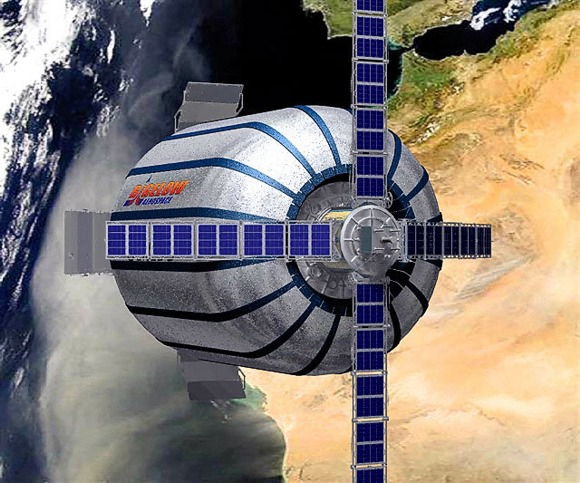
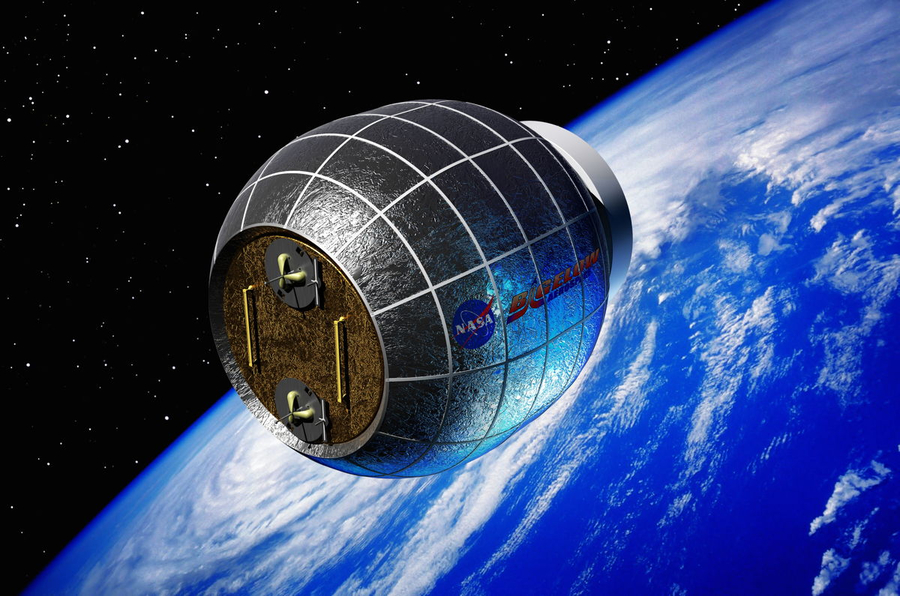
Bigelow Expandable Activity Module, and abbreviated BEAM, will be the first manned orbital module in Earth orbit. In expanded form an inflatable space station will have an area of 330 m 3 and can accommodate 6 astronauts.
first orbital hotel BEAM 5 (600x400, 172Kb)
BEAM launch into orbit is scheduled for 2015-th year. Within two years of the ISS astronauts will test module for durability, safety and comfort for human habitation. These studies will form the basis for further work on the creation of the world's first orbital hotel.
first orbital hotel BEAM 4 (580x483, 287Kb)


first orbital hotel BEAM 3 (700x463, 345Kb)
first orbital hotel BEAM 2 (700x450, 240Kb)

Read more

Read more...

Monday, June 6, 2011

Space

While it was just a TV show, that little speech at the beginning of the original Star Trek show really did do a good job of capturing our feelings about space.  It is those feelings that drive our love of astronomy and our desire to learn more and more about it. 

The thing that is most exciting about studying the universe is also the most frustrating and that is that no matter how expert we get, we are always just getting started.  But if it’s any consolation, some of the most advanced minds in science and from history always felt that way about space.  Even the greats such as Copernicus and Einstein looked up into space and felt like they were just a spec in the presence of such infinity.

Of course space is not infinite.  It has to be finite which means somehow there must be an end to it.  But if there is, nobody on this tiny planet has figured out where it is.  The only thing that has brought us to “the end of the universe” is our limited ability to see any deeper into space. 

But conquering the final frontier of space means more than just seeing more stars and planets and building the biggest telescope we can.  There are some mind blowing concepts about how space works that we have ahead of us to conquer.  The big bang and the expanding universe alone was enough to set your mind to spinning.  But then we have the coming of Einstein and the theory of relativity to set the entire idea on its ear.  All of a sudden space is not just three dimensions but the dimension of time becomes exportable and the twisting and maybe even travel through time seems almost possible.

The frontier of space is as much a journey of the mind as it is of distance.  When Steven Hawking showed us the mysteries of black holes, all of a sudden, time and space could collapse and be twisted and changed in those intergalactic pressure cookers.  If not for the wonders of radio astronomy, these ideas would remain just ideas but slowly science is catching up with theory.

But the brilliance of mathematicians and genius minds like Hawking and Einstein continue to stretch our concepts of space.  Now we have the string theory that could revolutionize everything we know about space, time and how the universe relates to itself.  We can’t just say, no, we have discovered enough.  It’s the final frontier.  The Starship Enterprise would not stop exploring so neither can we.  Because there is a hurdle still ahead that has a name but no real answer to it yet.  It’s called the Unified Field Theory and those that know tell us that when the Einsteins and Hawkings of our day crack that theory, every other theory will fall into place.

These exciting concepts seem some tools to put the enormity of space in context.  That may also be the value of science fiction.  Not only are science fiction writers often the visionaries of what comes to be in the future but they give us the idea that space is knowable, that despite how big it is and how small we are, we can conquer this frontier like we have conquered others before us.

For mankind, that is often enough.  If we can get the vision that we can conquer something, even if it is something so massive, so impossibly huge, it seems that we are capable of anything.  And the love of astronomy, maybe unlike any other force on earth, has brought together mankind toward that common goal of conquering the universe.  The quest to establish an international space station and to cooperate on spreading our reach off of this planet seems to find commonality between nations that otherwise cannot get along on the surface of the earth.

That alone may be a reason that we must continue to support astronomy locally and the space program nationally.  It is something that seems to bring peace rather than war and make us a better people.  But more than that it is as though this is what we were created to do.  To reach out to the stars may be our destiny.  If so then our love of astronomy is more than a hobby, it’s a calling.
Read more

Read more...

Pictures in the Sky

One of the earliest activities we engaged in when we first got into astronomy is the same one we like to show our children just as soon as their excitement about the night sky begins to surface.  That is the fun of finding constellations.  But finding constellations and using them to navigate the sky is a discipline that goes back virtually to the dawn of man.  In fact, we have cave pictures to show that the more primitive of human societies could “see pictures” in the sky and ascribe to them significance.

Constellations also have been important in culture and navigation long before we had sophisticated systems of navigation.  Early explorers, particularly by sea, relied exclusively on the night sky to help them find their way to their destination.  In fact, when “Columbus sailed the ocean blue in 1492” and “discovered” America, he could not have done it without astronomy and the help of navigation of the cosmos, much of which is made possible because of the important constellations. 

When learning to find the great constellations in the sky, we use the “find one, you found them all” system.  That is because the easiest constellation to find will guide us to the rest of them.  That constellation is The Big Dipper.  Look to the northern sky on a clear night and widen your field of vision from just focusing on one star and it will pretty much jump out at you.  In will look like a big kitchen pot or ladle, right side up in the fall, upside down in the spring.

When you have the big dipper under control, you can pretty easily find the North Star.  This is the star that those ancient sailors depended on the most to find their way to land.  Start with the far edge of the bowl of the Big Dipper, the side that is opposite the handle.  There are two stars that make up that side of the bowl.  So start at the bottom of the pot and mentally draw a line to the top star of the bowl.  These two stars are “pointing” to the North Star.  Just keep following that line, curving a bit with the sky and the bright star that you come to is the North Star.  You can impress your friends or family if you know the scientific name for this star is Polaris.

The North Star can then take you to The Little Dipper.  The key here is that Polaris is the tip of the handle of The Little Dipper and the bowl hangs down from the handle like it was hanging up in the kitchen.  Be patient with this one as the stars that make up The Little Dipper are dimmer than The Big Dipper.  But it pretty cool once you find it.

These are the obvious starting places but from The Little Dipper you can find the constellation known as “The Swan” or Cygnus.  Just use the same system you used to find The North Star but continue drawing that line that started in those pointer stars in the bowl of The Big Dipper.  Go about half as far as you went to find Polaris and you are there.  You will see a trapezoid of stars about as big as The Big Dipper.  This trapezoid forms the tail of The Swan.

That line that we are drawing from the pointer stars is our roadmap to another well known constellation which is Cassiopeia.  If you use that line and imagine you are directly under the two pointer stars, you will se a big “W” just off to the left of the line.  This is the constellation Cassiopeia, the wife of the king of Egypt, Cepheus, in Greek mythology.  There are so many more wonderful constellations to find and a good star map can continue your quest.

Like Cassiopeia, all of the constellations have wonderful stories and myths related to Greek culture.  It is just as fun to find the star clusters themselves as it is to enjoy the rich culture related to that constellation.  For all of the signs of the zodiac, for example, there is a related constellation in the sky.  So whether you are serious about astrology or not, its fun to find the constellation that relates to your “sign” (or that of your children) and be able to see how the ancients related to these pictures in the sky.
Read more

Read more...

Wednesday, December 2, 2009

Scientists See Supernova in Action

Scientists See Supernova in Action


Supernova 2007uy in the galaxy NGC2770 was already several weeks old on January 7, 2008 when NASA's Swift satellite took the image at left.
The image on the right was taken two days later and shows Supernova 2008D as well.


Astronomers witnessing the birth of an exploding star for the first time have seen a burst of X-rays as the star disintegrates.
Image: Supernova SN2008D.


A star trembled on the brink of eternity.
Outwardly all was serene, but its inside was falling into chaos.

Far away on the day of Jan. 9, Earth time, a satellite telescope by the name of Swift, which happened to be gazing at the star”s galaxy, a smudge of stars 88 million light-years away in the constellation Lynx, recorded an unexpected burst of invisible X-rays 100 billion times as bright as the Sun.

Alicia Soderberg, a Princeton astronomer who had been using the NASA satellite to study the fading remains of a previous supernova explosion, received the startling results of that observation by e-mail while giving a talk in Michigan.
Recognizing that this was something extraordinary, she sounded a worldwide alert.

In the following hours and days, as most of the big telescopes on Earth, and the Hubble Space Telescope and the Chandra X-ray Observatory watched from space, the star erupted into cataclysmic explosion known as a supernova, lighting up its galaxy and delighting astronomers who had never been able to catch an exploding star before it exploded.

“We caught the whole thing on tape, so to speak,” Dr. Soderberg said in an interview.
“I truly won the astronomy lottery. A star in the galaxy exploded right in front of my eyes.”

She and 42 colleagues from around the world have now told the tale of this discovery in a paper in Nature to be published Thursday and in a telephone news conference Wednesday.
The observations, they say, provide a new window into the process by which the most massive stars end their lives and give astronomers new clues on how to look for these rare events and catch them while they are still in their most explosive, formative stages.

”Most supernovas,” Dr. Soderberg explained, “are discovered and classified by their visible light, but that typically does not happen until theexplosion is a month or more old and has brightened enough to be seen over intergalactic distances.”

The true fireworks, she said, happen much earlier when a shock wave from the imploding core hits the star’s surface, producing so-called breakout light, which lasts only a few minutes.

“The physics of the explosion is encoded in the breakout light,” Dr. Soderberg said, adding that the chance that the Swift telescope was observing during those moments was “unfathomable.”
Astronomers now know, however, that X-rays from the breakout can be an early alert. “Supernova 2008D was the first to be found from its X-ray emission,” said Robert Kirshner, a supernova expert at the Harvard-Smithsonian Center for Astrophysics, referring to the supernova by its official name, “but if we build the right type of X-ray satellites, it won”t be the last supernova we find this way.”

“That is really what is so wonderful here,” he said.

”So new were the X-rays,” said Dr. Soderberg, “that she and her collaborators did not know they were looking at an incipient supernova until a day or two later and ground-based telescopes had seen it grow in visible light.”

“It was a baby supernova in that sense,” Dr. Soderberg said.
“Here was an object brand new. At first we didn”t recognize it.”

The supernova was of a sort known as Type Ibc, the rarest and most luminous of the explosions caused by the collapse of the cores of massive stars, theastronomers have concluded.
Another kind, known as Type Ia supernovas, are believed to result from the destruction of much smaller stars and are beloved of cosmologists who use them to track the expansion of the universe and effects of dark energy.

The star that died last January could have been 20 times as massive as the Sun or even bigger, Dr. Soderberg said.
It was probably a type called a Wolf-Rayet star.
They are very hot stars with surface temperatures of 50,000 degrees Fahrenheit or more and are often blowing gas away in strong winds. Dr. Soderberg described them as “very violent stars, very massive.”

Because it is gravity that stokes the thermonuclear furnace at the centers of stars, the more massive they are, the younger they die.
In the case of a star 10 or 20 times as massive as the Sun, it could be only a few million years. “These stars live fast and die young.
We don”t know if they leave a beautiful corpse,” Dr. Kirshner said.

Many of the elements necessary for life and its accessories, like carbon, oxygen, iron and gold, are produced in a thermonuclear frenzy during the final stages of these explosions, which then fling them into space to be incorporated into new stars, new planets, new creatures.

“If you”re wearing gold jewelry,” Dr. Kirshner said, “it came from a supernova explosion.”
Read more

Read more...

Some Bizarre Things in Space

From miniature black holes to distortions in the fabric of space-time, from galaxies that are eating each other to matter that can neither be seen nor detected directly…space is full of many strange things. And here are some of the strangest.

1. Neutrinos


Neutrinos are electrically neutral, virtually mass-less elementary particles that can pass through miles of lead unhindered. Some are passing through your body as you read this. These “phantom” particles are produced in the inner fires of burning, healthy stars as well as in the supernova explosions of dying stars. Detectors are being embedded underground, beneath the sea, or into a large chunk of ice as part of IceCube, a neutrino-detecting project.

2. Galactic Cannibalism


Like life on Earth, galaxies can “eat” each other and evolve over time. The Milky Way’s neighbor, Andromeda, is currently dining on one of its satellites. More than a dozen star clusters are scattered throughout Andromeda, the cosmic remains of past meals. The image above is from a simulation of Andromeda and our galaxy colliding, an event that will take place in about 3 billion years.

3. Gravity Waves


Gravity waves are distortions in the fabric of space-time predicted by Albert Einstein’s theory of general relativity. The waves travel at the speed of light, but they are so weak that scientists expect to detect only those created during colossal cosmic events, such as black hole mergers like the one shown above. LIGO and LISA are twodetectors designed to spot the elusive waves.

4. Exoplanets


Until about the early 1990s, the only known planets in the universe were the familiar ones in our solar system. Astronomers have since identified more than 190 extrasolar planets (as of June 2006). They range from gargantuan gas worlds whose masses are just shy of being stars to small, rocky ones orbiting dim, red dwarfs. Searches for a second Earth, however, have so far turned up empty. Astronomers generally believe that better technology is likely to eventually reveal several worlds similar to our own.

5. Dark Matter


Scientists think it makes up the bulk of matter in the universe, but it can neither be seen nor detected directly using current technologies. Candidates range from light-weight neutrinos to invisible black holes. Some scientists question whether dark matter is even real, and suggest that the mysteries it was conjured to solve could be explained by a better understanding of gravity.

6. Cosmic Microwave Background


Also known as the CMB, this radiation is a primordial leftover from the Big Bang that birthed the universe. It was first detected during the 1960s as a radio noise that seemed to emanate from everywhere in space. The CMB is regarded as one of the best pieces of evidence for the theoretical Big Bang. Recent precise measurements by the WMAP project place the CMB temperature at -455 degrees Fahrenheit (-270 Celsius).

]7. Mini Black Holes


If a radical new “braneworld” theory of gravity is correct, then scattered throughout our solar system are thousands of tiny black holes, each about the size of an atomic nucleus. Unlike their larger brethren, these mini-black holes are primordial leftovers from the Big Bang and affect space-time differently because of their close association with a fifth dimension.


8. Anti-matter

Like Superman’s alter-ego, Bizzaro, the particles making up normal matter also have opposite versions of themselves. An electron has a negative charge, for example, but its anti-matter equivalent, the positron, is positive. Matter and anti-matter annihilate each other when they collide and their mass is converted into pure energy by Einstein’s equation E=mc2. Some futuristic spacecraft designs incorporate anti-matter engines.

9. Vacuum Energy


Quantum physics tells us that contrary to appearances, empty space is a bubbling brew of “virtual” subatomic particles that are constantly being created and destroyed. The fleeting particles endow every cubic centimeter of space with a certain energy that, according to general relativity, produces an anti-gravitational force that pushes space apart. Nobody knows what’s really causing the accelerated expansion of the universe, however.

10. Quasars


These bright beacons shine to us from the edges of the visible universe and are reminders to scientists of our universe’s chaotic infancy. Quasars release more energy than hundreds of galaxies combined. The general consensus is that they are monstrous black holes in the hearts of distant galaxies. This image is of quasar 3C 273, photographed in 1979
Read more

Read more...

Thursday, November 5, 2009

9 Global Devastation Hotspots, Before and After

The world is changing. It has gone beyond the perceptions of the skeptics who say it’s “a cycle” and demonstrated beyond any reasonable doubt that humans are having a dramatic and negative impact on the world.

Here are the images that portray the greatest human impact on the environment:


Almeria, Spain

“Agriculture Development”

This pair of satellite images shows the impact of massive and rapid agricultural development in Almeria Province along Spain’s southern coast.

In the earlier image, the landscape reflects rather typical rural agricultural land use. In the 2000 image, much of the same region-an area covering roughly 20 000 hectares (49 421 acres) - has been converted to intensive greenhouse agriculture for the mass production of market produce.

Greenhouse-dominated land appears as whitish gray patches.

In order to address increasingly complex water needs throughout Spain, the government adopted the Spanish National Hydrological Plan (SNHP) in 2001.

Initially, this water redistribution plan involved the construction of 118 dams and 22 water transfer projects that would move water from parts of the country where it was relatively abundant to more arid regions.

In 2004, the Spanish government announced it would begin exploring more environmentally friendly water-saving technologies, such as wastewater recycling and seawater desalinization.


Beira Fire Scars, Mozambique

“Arson”

During Mozambique’s dry season—May to October—fires leave burn scars on the landscape. Over a third of the country is affected by fire each year. NASA’s Earth Observatory recorded an especially large number of fires in August 2006.

The widespread nature of the fires suggests that they may have been intentionally set. Population growth in Mozambique has drastically intensified the need for agricultural land as well as for forestry and wildlife products, thus putting increased pressure on limited resources. Fires have become a primary means of clearing land for cultivation.

The 21 May 2006 satellite image was acquired at the beginning of the 2006 dry season, before many fires had left their mark.

The 9 August 2006 image shows the same area roughly 2.5 months later. Pink, dark red, and black fire scars cover much of the landscape.

Many plants in Mozambique are adapted to periodic fire. However, the increasing frequency of fires affects the natural regeneration of vegetation and is believed to be reducing species diversity in Mozambique’s forests.

Frequent fires can also increase soil erosion and negatively impact hydrology.


Aral Sea, Kazakhstan, Uzbekistan

“Diverting Rivers for Cotton Production”

The name “Aral Sea” comes from the word “aral” meaning island. The sea’s name reflects the fact that it is a vast basin that lies as an island among waterless deserts.

The Aral Sea was once the world’s fourth largest inland sea. Its problems began in the 1960s and 1970s with the diversion of the main rivers that feed it to provide for cotton cultivation in arid Soviet Central Asia.

The surface of the Aral Sea once measured 66 100 km² (25 521 square miles).

By 1987, about 60 per cent of the Aral Sea’s volume had been lost, its depth had declined by 14 m (45 feet), and its salt concentration had doubled, killing the commercial fishing trade.

Wind storms became toxic, carrying fine grains of clay and salts deposited on exposed sea floor.

“Re-engineering will leave the South Aral Sea completely dry, perhaps within 15 years.”

Life expectancies in the districts near the sea are significantly lower than in the surrounding areas.

The sea is now a quarter of the size it was 50 years ago and has broken into two parts, the North Aral Sea and the South Aral Sea.

Re-engineering along the Syr Darya River delta in the north will retain water in the North Aral Sea, thereby drying the South Aral Sea completely, perhaps within 15 years.


Santa Cruz, Bolivia

“Where People Go, Nature Dies”

Santa Cruz is situated in Bolivia’s rich, fertile lowlands, a region highly suitable for agriculture.

In the 1975 satellite image, the region’s forested landscape appears as a dense, essentially unbroken expanse of deep green that extends to the Rio Grande (Guapay) River. It was beautiful from the sky and on the ground.

By 1986 roads had been built that linked the region to other population centers.

As a result, large numbers of people migrated to the area.

A large agricultural development effort (the Tierras Baja project) led to widespread deforestation as forests were clear-cut and converted to pastures and cropland.

By 2003, almost the entire region had been converted to agricultural lands, including the area east of La Esperanza across the river.

In the area north and west of Los Cafes (upper left), notice the grid of squares on the landscape, each with an internal star-shaped pattern.

At the center of each square is a small community.


Nangbeto Reservoir, Togo

“First Law: Do No Harm”

A feasibility study in the 1960s identified the Nangbéto region as the best location for hydroelectric power development in Togo.

The site - 160 km upstream from the coast – is the only place where a dam of sufficient volume to regulate the flow of the Mono River was possible.

As demand for electricity grew, the decision was made in the 1980s to proceed with the Nangbéto Hydroelectric Dam.

Satellite images from 1986 and 2001 show the region before and after the dam’s construction.

The completed dam created a reservoir with a surface area of approximately 180 km2 and a volume of 1,465 million m3.

In addition to generating electricity for domestic and commercial use, the dam also provides water for agricultural irrigation and is a source of commercial fishing and tourism. However, these benefits have been offset by environmental costs.

Construction of the dam, creation of the reservoir, and installation of transmission lines resulted in the loss of nearly 150 km2 of savannahs and gallery forests that provided habitat for rare local fauna.

The reservoir submerged 1,285 households and 5,500 hectares of agricultural land. Loss of the natural vegetation in the region has altered the climate enough to have had a negative impact on nearly 350 hectares of banana plantations. The creation of the reservoir has also increased the population of two species of aquatic snails that serve as intermediate hosts of the parasite that causes the disease bilharzia.


Shume Magamba, United Republic of Tanzania

“TIMBER!”

Shume Magamba forest reserve is located in the West Usambara Mountains. It is one of the thirteen blocks forming the Eastern Arc Mountains of Tanzania and Kenya, along the Albertine Rift.

It is comprised of 12 000 ha of moist montane forest, which is a gazetted forest reserve, with 2 500 ha under exotic plantation.

The Eastern Arc is one of the most biologically rich regions in the world, with a large number of endemic animal and plant species. It is regarded as one of the world’s top 25 global biodiversity hotspots and is increasingly being managed for biodiversity conservation.

The forest is threatened by timber harvesting (pit sawing) and agricultural encroachment.

Part of the Shume-Magamba Forest on the West Usambara Mountains was degazetted from a Forest Reserve soon after independence in 1961 and was then converted to agriculture by land-hungry residents.

Other major threats to the forests in the West Usambaras include fire spreading from surrounding farmlands and gold mining. In the former case, the enhanced burning regime is believed to have been the main cause of the replacement of Afromontane forests with grassland and scrub-grassland across large areas.

The sharp boundaries at the edges of the forest indicate areas where forest has been converted to farmland. The 2005 image shows these boundaries pushing further into the forest in several places. The high resolution image (see photos panel below) shows detail of the area highlighted by the yellow box in the above images. In addition to crops, areas of forest plantation are displacing natural forest. Areas of trees with parallel lines cut through them are generally tree farms.

Tanzania had the sixth largest annual net loss in forest area between 2000 and 2005 in the world of about 412 000 ha/yr; second largest in Africa after Zambia. In total, between 1990 and 2005, United Republic of Tanzania lost 14.9 per cent of its forest cover. Currently, 39.9 per cent of the country is forested. Apparently, a number of mountains have lost at least 80 per cent of their original forest cover, including Taita, Ukaguru, Mahenge, and West Usambara.

The energy economy in Tanzania is largely focused on collecting, distributing, and consuming wood fuels (wood and charcoal) to satisfy household demands for cooking. As much as 90 per cent of all primary energy consumed in Tanzania is biomass based.


Lake Hamoun, Afghanistan and Iran

“Competing for Water”

Iran’s Lake Hamoun is fed primarily by water catchments in neighboring Afghanistan.

In 1976, when rivers in Afghanistan were flowing regularly, the lake’s water level was relatively high.

Between 1999 and 2001, however, the lake all but dried up and disappeared, as can be seen in the 2001 satellite image above.

The “dry phase” of Lake Hamoun is a striking example of how competition for scarce water resources can transform a landscape.

When droughts occur in Afghanistan, or when water in watersheds that support Lake Hamoun are drawn down for other natural or human-induced reasons, the end result is a dry lakebed in Iran.

In addition, when the lake is dry, seasonal winds blow fine sands off the exposed lakebed.

The sand is swirled into huge dunes that may cover a hundred or more fishing villages along the former lakeshore.

Wildlife around the lake is negatively impacted and fisheries are brought to a halt. Changes in water policies and substantial rains in the region saw a return of much of the water in Lake Hamoun by 2003 .


Huang He Delta, China

“Sediment Building Up”

Sometimes, it isn’t what humans do, but rather what we don’t do that have a dramatic effect on the environment. As you can see by the images, there is a large protrusion of land that is sticking out that wasn’t there before.

The Huang He (Yellow River) is the muddiest river on Earth and is China’s second longest river, running 5 475 km (3 395 miles) from eastern Tibet to the Bohai Sea.

The Huang He’s yellow color is caused by its tremendous load of sediment, composed primarily of mica, quartz, and feldspar particles.

The sediment enters the water as the river carves its way through the highly erodable loess plateau in north-central China (Loessial soil is called huang tu, or “yellow earth,” in Chinese).

Centuries of sediment deposition and dike building along the river’s course has caused it to flow above the surrounding farmland in some places, making flooding a critically dangerous problem.

Where the Huang He flows into the ocean, sediments are continuously deposited in the river delta, where they gradually build up over time.

Between 1979 and 2000 - as these satellite images show - the delta of the Huang He river expanded dramatically. Several hundred square kilometres of newly formed land were added to China’s coast during this period.


Sakhalin, Russian Federation

“People Increase Risk of Fire”

Mixed deciduous and evergreen needle-leaf trees dominate the boreal forests of Sakhalin Island, just off the eastern coast of Russia.

The tremendous natural reserves of the boreal forests serve as “carbon sinks” that help to regulate global climate. They are among the most important natural “CO2 blockers” in the world today. Boreal forests are also home to a unique collection of plants and animals, including rare and endangered species such as the Amur Tiger.

“Roughly 300 intensely hot fires burned an area nearly the size of Luxembourg.”

Fire is a natural and often vital component in maintaining the health of boreal forests. But since the 1950s, the frequency of fires has increased on Sakhalin Island as its forests have been subjected to rapid exploitation and disturbance in the acquisition of lumber, oil, coal, and peat.

As people moved into the region in greater numbers, the risk of fires started by trains, cars, trash fires, and wood stoves increased greatly. These satellite images show the impact of forest fires on Sakhalin Island.

In 1998, roughly 300 intensely hot fires burned an area nearly the size of Luxembourg. Three people died and nearly 600 were made homeless by a very rapidly moving crown fire that consumed the town of Gorki within a few hours. The 1999 image very clearly shows the extent of the fire damage to the island’s forests near the end of that year.


Read more

Read more...

Wednesday, November 4, 2009

How Killer Electrons Form in Space

Superstrong pulses in Earth’s magnetic field can drive electrons to near light speed, physicists reported in June. These “killer” electrons can cripple satellites and they present a radiation threat to astronauts. Scientists have long wondered how they accumulate enough energy to zip around in space.


Qiugang Zong, of the University of Massachusetts Lowell, led a team of physicists who analyzed data from the European Space Agency and NASA’s Cluster spacecraft, four satellites situated at the edge of Earth’s magnetic field. The satellites observed the pulses in the wake of an October 2003 magnetic storm triggered by a coronal mass ejection—a plasma spitball shot out by the sun—that slammed into Earth’s magnetosphere. The influx of energetic particles created waves in our planet’s magnetic field, Zong’s team discovered. As the pulses approached Earth, the ultralow frequency waves made the planet’s magnetic field lines oscillate and accelerated electrons traveling along the field lines to extraordinarily high speeds.
“ULF waves are standing waves that stay in their location and vibrate like a string,” Zong says. “It’s amazing that the wave power transfers to the killer electrons.” Zong’s study represents the first time this process has been observed directly.
The storm that the Cluster spacecraft witnessed damaged several satellites and caused power outages in Sweden. Astronauts in the International Space Station were ordered into a heavily shielded module during the storm. Fortunately for surface-­dwelling ­humans, Earth’s magnetic field and atmosphere do a good job protecting us from such killer electrons

________________________________________________________


Read more

Read more...

Disclaimer :
All the postings of mine in this whole Blogspot is not my own collection. All are downloaded from internet posted by some one else. I am just saving some time of our Blogspot users to avoid searching everywhere. So none of these are my own videos or pictures. I Am not violating any copy rights law or not any illegal action i am not supposed to do.If anything is against law please notify so that they can be removed. Thanks
Malik Imran Awan

  ©Template by Malik.